
Organisations & training · CPD, workshops, team supervision
Creative, trauma-informed training for your team
Interactive training, CPD, team supervision and group programmes, shaped around your organisation and the people you support. I come to you anywhere in the UK, or work with your team online.

With Judy HarrisonHCPC-registered dramatherapist · HCPC AS14528
Training that people take part in
I am a dramatherapist, so my training is active. Alongside the theory, teams learn through movement, image, role and working together. It makes difficult subjects easier to approach, and it tends to stay with people long after the day.
I work with teams in the UK and abroad. This is CPD and team development, not a route to qualifying as a dramatherapist.
What I offer
Creative clinical training for teams
Interactive training for charities, corporates, clinical organisations, universities, schools and colleges. Learning through movement, image and role, as well as talk.
Trauma-informed training
Understanding trauma, secondary trauma and burnout, and how to work in a trauma-informed way. Including clinical training for the violence against women and girls (VAWG) sector.
CPD for counsellors and therapists
Creative CPD for counsellors, psychotherapists, creative arts therapists and psychologists, in the UK and internationally.
Team and group supervision
Regular supervision for teams working with vulnerable and marginalised groups, across every sector.
Group dramatherapy programmes
A run of dramatherapy groups designed for the people your organisation supports.
Wellbeing workshops and talks
Sessions on wellbeing, psychological safety and looking after the helpers, for staff teams and leaders.
I also bring dramatherapy into schools and children’s homes, supports theatre productions working with heavy material, and offers EMDR where it is part of a wider contract.
Why creative training works
Dry training is easy to sit through and easy to forget. Using the senses and the body as well as the mind lets a team learn by doing. It keeps the room safe enough to take part, and makes space for some fun along the way.
- Gets past resistance: projective techniques make it safer to approach uncomfortable themes
- Brings unconscious bias into the open, so a team can work through it rather than against it
- Links attachment and early experience to how people behave at work
- Shows how projections play out in a team, and who is carrying what
- Takes the dryness out of training: interactive, safe and less hostile
- Leaves your team with resources they can keep using after the day
I work best with teams who are open to it: change and learning happen when people are ready to welcome them.
For leaders: psychological safety
Read the transcript
So, what is psychological safety? At the top of the organisation: being open and willing to put aside their current learning, their current views, the way that they have been trained and developed, maybe in their postgraduate qualifications or diplomas, putting that aside for a moment, and being open to a brand new way of learning. In psychology, this is called the unfreezing, where you are open to absorb new perspectives, new points of view, understand different perspectives, different intersections even. And not only do you learn that through being open, the unfreezing, but then you kind of lock in that learning, and you take that back into the workplace to enable your staff team to be creative, to be innovative, and to take risks without that fear of a negative consequence. And you’ll find with that, if that’s done regularly, that your team will soar just by having the audacity to imagine, believe, see and execute. Do you want a staff team that are well behaved, that don’t ask too many questions, they have a brief, they crack on with it, they execute? Or are you the type of manager that wants a team that wants to think outside the box, that wants to bring something new, something fresh, something raw, something that will almost unlock a different form of learning? Think about your team that you’re managing or you’re overseeing. Would you say that there is psychological safety for your team, or is that something you’re going to have to go out of your way to create? Be well.
Teams do their best work when people can speak up, try something new and make mistakes without fear. In this short video, I explain what psychological safety means for senior leaders, and why it starts at the top.
“Would you say that there is psychological safety for your team, or is that something you’re going to have to go out of your way to create?”
Judy Harrison
Sessions for senior leadership teams combine this kind of reflection with practical, creative exercises your managers can take back to their own teams.
Who I have worked with
In the last five years I have been invited in by:
- Universities
- Schools
- Charities
- Corporates
- International charities
- A local authority
- Adoption agencies
- A law charity
- Theatres

















Training around the world
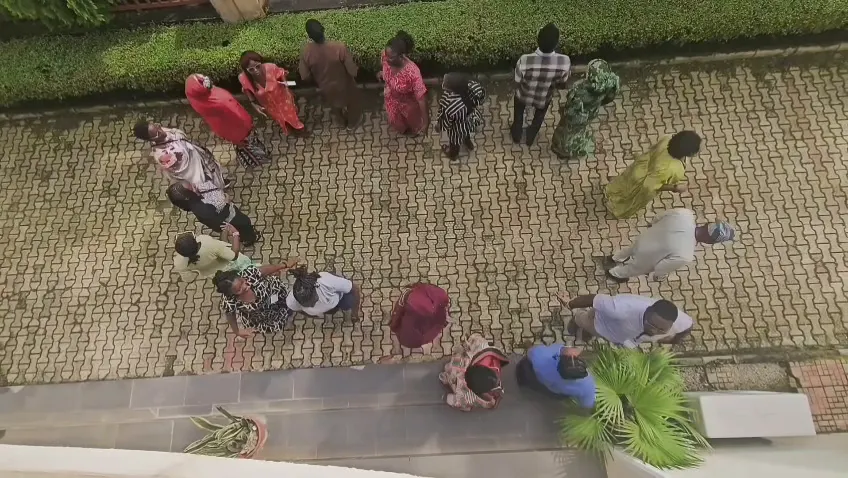
Every year I travel to Nigeria with the Nigerian IDP Diaspora Support Group (NIDSG), a charity that works in camps and very vulnerable communities. IDP stands for internally displaced people: people forced from their homes who are still living in their own country. There I train lay counsellors who support people affected by conflict and displacement. The week mixes theory with practical and creative techniques that the counsellors take back to their communities.
I also train counsellors, psychotherapists, creative arts therapists and psychologists online, wherever they are. Read more about my international work.
Waiting on Judy
Judy’s organisation brochure
Judy is sending a write-up of her organisation, training and contracted work (questionnaire #113). When it arrives, add named programmes, example agendas and any case examples she clears here.
Ways to work together
In person anywhere in the UK, or online. Every piece of work is planned with you, around your people and your setting.
Half day
A focused workshop or CPD session on one theme.
Full day
Deeper training with time to practise and reflect together.
Online workshop
Interactive training by video, for teams in different places.
Regular contract
An ongoing programme across a term or a year.
Talk or keynote
For a conference, an away day or an awareness event.
Fees depend on the brief. Tell me what you have in mind and I will send you a plan and a quote.
Ask for a quoteMore ways I work with organisations
Theatre productions
A dramatherapist in the rehearsal room when a production carries heavy material.
Read more about theatre productionsSchools & children’s homes
Dramatherapy, supervision and staff training for schools, children’s homes and councils.
Read more about schools & children’s homesInternational work
Training lay counsellors in Nigeria every year, and earlier work in Jamaica.
Read more about international workRetreats
Rest and reset for practitioners, with the Black Dramatherapists’ Collective.
Read more about retreats
Kind words
What professionals say about Judy
Judy has a unique ability to create a safe space where people feel truly seen and heard.
Elizabeth, Google review She has deep theoretical knowledge and applies this in such a practical way that is highly effective for both clients and trainees.
Kevin O., Google review Judy is an excellent trauma-informed and inclusive facilitator!
Diana S., Google review We left feeling seen, heard and nourished.
Moriam G., Google review
To protect client confidentiality, we only share words from fellow professionals, never from therapy clients.
Questions
Questions from organisations
Can’t see your question? Read all the FAQs, email admin@therawake.co.uk or see other ways to get in touch.
How much does training cost?
Fees depend on the brief: the length, the size of the group, where it happens and how much preparation it needs. Email me a few lines about what you have in mind and I will send you a plan and a quote.
Do you come to us, or is it online?
Either. I travel to organisations across the UK for in-person training, workshops and team days, and run interactive workshops online for teams in different places. International work is arranged case by case.
Is this CPD, or a dramatherapy qualification?
It is CPD and team training. Sessions can count towards your continuing professional development, but they are not a route to qualifying as a dramatherapist: that takes an HCPC-approved master’s degree.
Can you give certificates or attendance records for CPD?
Yes. Tell me when you book if your staff need a certificate or attendance record for their CPD log, so it can be prepared for the day.
What is trauma-informed training?
Training that helps staff understand how trauma affects people, including the people doing the helping, and how to work in ways that build safety, trust and choice. I bring more than 20 years of work with people who have lived through trauma, and make it practical and interactive rather than a slide deck.
Do you work with the violence against women and girls (VAWG) sector?
Yes. Clinical training for VAWG services is part of my work, alongside supervision for teams who support survivors.
How many people can take part?
It depends on the format. Creative, hands-on workshops work best with a group small enough for everyone to take part; talks and keynotes can be much larger. Tell me how many people you are thinking of.
Do we have to be a therapy organisation?
No. I work with universities, schools, charities, companies, international charities, local authorities, adoption agencies, a law charity and theatres. Training is shaped for your team, whatever your field.
Need help right now? Therawake is not an emergency service. If you or someone else is in immediate danger, call 999. For urgent mental health support, call NHS 111 (option 2), or talk to Samaritans any time, free:
Call Samaritans 116 123
Planning something for your team?
Tell me about your organisation, the people you work with and what you have in mind. Every piece of work is shaped to the brief and quoted for you.